5 Museums to Enjoy in the City of London
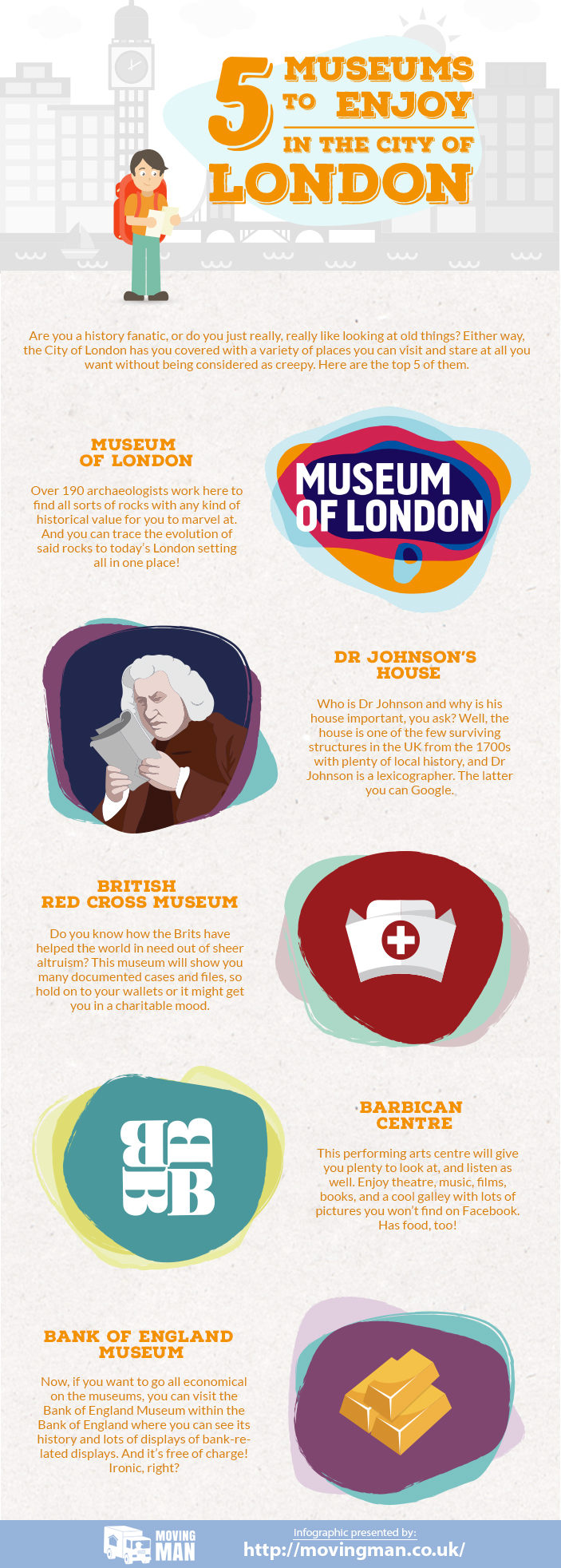
Are you a history fanatic, or do you just really, really like looking at old things? Either way, the City of London has you covered with a variety of places you can visit and stare at all you want without being considered as creepy. Here are the top 5 of them.
• Museum of London
Over 190 archaeologists work here to find all sorts of rocks with any kind of historical value for you to marvel at. And you can trace the evolution of said rocks to today’s London setting all in one place!
• Dr Johnson’s House
Who is Dr Johnson and why is his house important, you ask? Well, the house is one of the few surviving structures in the UK from the 1700s with plenty of local history, and Dr Johnson is a lexicographer. The latter you can Google.
• British Red Cross Museum
Do you know how the Brits have helped the world in need out of sheer altruism? This museum will show you many documented cases and files, so hold on to your wallets or it might get you in a charitable mood.
• Barbican Centre
This performing arts centre will give you plenty to look at, and listen as well. Enjoy theatre, music, films, books, and a cool galley with lots of pictures you won’t find on Facebook. Has food, too!
• Bank of England Museum
Now, if you want to go all economical on the museums, you can visit the Bank of England Museum within the Bank of England where you can see its history and lots of displays of bank-related displays. And it’s free of charge! Ironic, right?
Frequently Asked Questions
If you're planning a family visit around central London, look for interactive, space-friendly options with plenty of room to move. The Science Museum is a classic for hands-on learning, while the Natural History Museum helps kids spot something new in every gallery. For a calmer pace, the Museum of London Docklands offers clear storytelling around London's riverside history. Tip: start early on weekdays, keep a snack stop in mind, and check exhibition times before you go so you're not rushing between galleries.
Often, yes - especially for popular museums and special exhibitions in the City of London area. Main attractions can run on general entry, but timed tickets are common for busy periods. Booking ahead can save you time at the entrance and reduce the chance of queues around key landmarks. It's also worth checking whether your museum visit includes free areas versus ticketed galleries, as some sites offer both. If you're visiting during school holidays or the summer months, advance booking is the safest option for a smooth day out in London.
Most visitors plan around 1.5-3 hours at the Museum of London, depending on how deeply you want to explore. Start with the main timeline displays so you get the bigger picture, then pick one or two deeper galleries rather than trying to cover everything. If you're especially interested in everyday life, look out for social history collections and period rooms. That approach keeps the visit enjoyable for all ages. If your day includes other nearby stops, map the route first - many people combine the Museum of London with sites around St Paul's and the South Bank for a seamless sightseeing loop.
On wet days, you'll be happiest choosing museums with lots of indoor galleries and short walking distances between them. A simple City-to-central route could be: begin at the Museum of London for the history overview, then continue to a larger exhibition venue nearby for a change of pace. If you're travelling with kids, keep breaks flexible and focus on hands-on or display-heavy rooms. In short, plan fewer locations and spend longer per stop so the day doesn't feel rushed. If you're balancing it with appointments, give yourself breathing space for travel delays and keep an eye on closing times.
Yes, many City-focused museums are designed to be accessible, but it's still smart to check specific details before you set off. Look for step-free entrances, accessible toilets, and lift access - especially when visiting older buildings. Most large sites also offer accessible routes between major galleries and staff who can assist if you need help. If you're planning multiple stops, consider routes around major hubs like St Paul's area and the Thames corridor, where it's easier to move between attractions. When you confirm access information, you'll reduce stress and keep the visit comfortable for everyone.
Yes - moving delicate pieces safely usually relies on modern packing methods and the right equipment. If you're relocating within London for an office move, gallery handling, or furniture transport, professional movers should use protective blankets and straps, secure wrapping, and strong eco packing boxes designed to prevent movement during transit. The best teams also photograph items before and after, which adds reassurance if anything needs checking later. We also follow Compliance with UK transport, safety, and handling regulations, which matters when moving fragile or high-value belongings between boroughs.
When choosing a removals service, check for visible proof of training, background assurance, and safe working standards. A trustworthy London moving company should be fully insured, with DBS-checked staff, plus clear evidence of professional training. Accreditation matters too - teams aligned with recognised standards such as SafeContractor or the British Association of Removers often follow more consistent safety processes. You can also verify past performance through reviews on Google Business Profile or Trustpilot, and, where relevant, see listings on Checkatrade. That combination helps you feel confident before you commit to a quote for house removals or office moves.
Good insurance coverage should be clear at the quotation stage, not hidden until the day of delivery. In practice, reputable professional movers will explain what's covered, what documents you'll receive, and how claims are handled if something is damaged. If you're moving items that are valuable, fragile, or awkwardly shaped, ask how they secure those loads - this often involves protective materials, robust strapping, and careful load planning. For peace of mind, our fully insured approach is supported by trained, DBS-checked movers and careful checks before and after transport. If you'd like, you can ask us what's covered for your exact furniture or box count.
If you're planning museum stops across central London and nearby districts, these areas are commonly convenient for visitors based on transport links and walking routes. Consider exploring: City of London (City of London), Westminster, Camden, Islington, Tower Hamlets, Southwark, Lambeth, Hackney, Greenwich, and Kensington. These boroughs each have their own visitor-friendly vibe - so you can build a day around what interests you most, whether that's history, art, or science. If you're also thinking about travelling later for hotel check-in or a move, it's worth planning your route early to avoid delays around busy streets like major bridges and rail stations.
For planning museum days, it helps to base your route around landmarks and known transport corridors. Popular anchor points include St Paul's Cathedral, the Thames riverside, Trafalgar Square, and the South Bank walkways. Roads and streets that often work well as navigation guides include Fleet Street, Victoria Embankment, Charing Cross Road, and Strand. If you're combining museums with a meal, Aldwych and Covent Garden areas can be practical meet-up points. That way, you're not zig-zagging across central routes and you can keep your schedule realistic - especially if you're travelling with children or accessibility needs.
We regularly support London customers with day-to-day house removals and office moves - so people can still enjoy their normal routines, even when life is busy. Over 14 years of professional removals and relocation services, we've helped clients move through tight access areas near major hubs, coordinating timing to reduce disruption. Our Track record: 2200+ successful moves completed locally means we're used to real-life constraints like narrow streets, lift bookings, and parking restrictions. If you're moving furniture transport items from a flat near a busy junction, we'll plan the route, use protective materials, and confirm the safe loading procedure first.
Pricing should feel clear and predictable from the first conversation. A reputable removals service will confirm what's included - like packing, dismantling if needed, and the number of items - so you're not surprised on moving day. We find it helps to ask about access conditions (stairs, lifts, parking bays, and how long you'll need loading time), because that affects turnaround and crew planning. You can also request a written quote that matches your inventory, then ask what would change the price. For many customers, this straightforward approach supports peace of mind and helps you budget for your move across London and nearby boroughs.
After your move, check your borough council's recycling guidance for boxes, paper wrap, and any protective materials. Many areas in London run mixed recycling collections, while cardboard and paper often go in the same stream. If you've used eco packing boxes, you'll usually find they're easier to flatten and recycle once everything's unpacked. For bulky waste, your local recycling centre can also accept certain items depending on what you're disposing of. If you tell us your borough, we can point you to the right type of council site to check so you follow the correct rules for London recycling.
Sustainability matters, especially if you're moving frequently or relocating across busy parts of London. Our approach is built around Eco rating: 99% of packing materials and transport methods are eco-friendly and low-emission. That usually means using recyclable packing options and minimising unnecessary packaging. We also plan routes and load space to reduce waste and avoid repeated journeys where possible. For customers, that translates into a cleaner, more responsible process without compromising on protection - think secure wrapping, protective blankets and straps, and careful handling. If you'd like, ask about eco packing boxes for your specific item list so you can keep the move safe and greener.
Same-week dates are often possible, but it depends on workload and access conditions. When you contact a moving company, have your postcode, preferred moving day, and a rough inventory ready - along with any constraints like parking permits, lift times, or narrow building entrances. In many cases, it helps to confirm whether you need house removals, packing, storage, or furniture transport, because those affect turnaround. On the day, professional movers should arrive with protective materials, equipment for safe handling, and a clear plan. For extra assurance, ask about background-checked staff, photos before and after, and how they'll protect floors and doorways during loading and unloading.